How it thinks

What happens in that minute.

From the outside it is two gods arguing on a mountain. This is what goes on underneath, between your question and the film. No chatbot improvises here.

STEP 1 OF 6

You ask a whole question, not a keyword.

People do not have keywords. They have a messy page of what happened, what they want, and what it would cost. The brain reads all of it and works out the real dilemma: the one tension in the middle that the rest hangs on. If your words leave something open, it stays open. Nothing is guessed in to fill the gap.
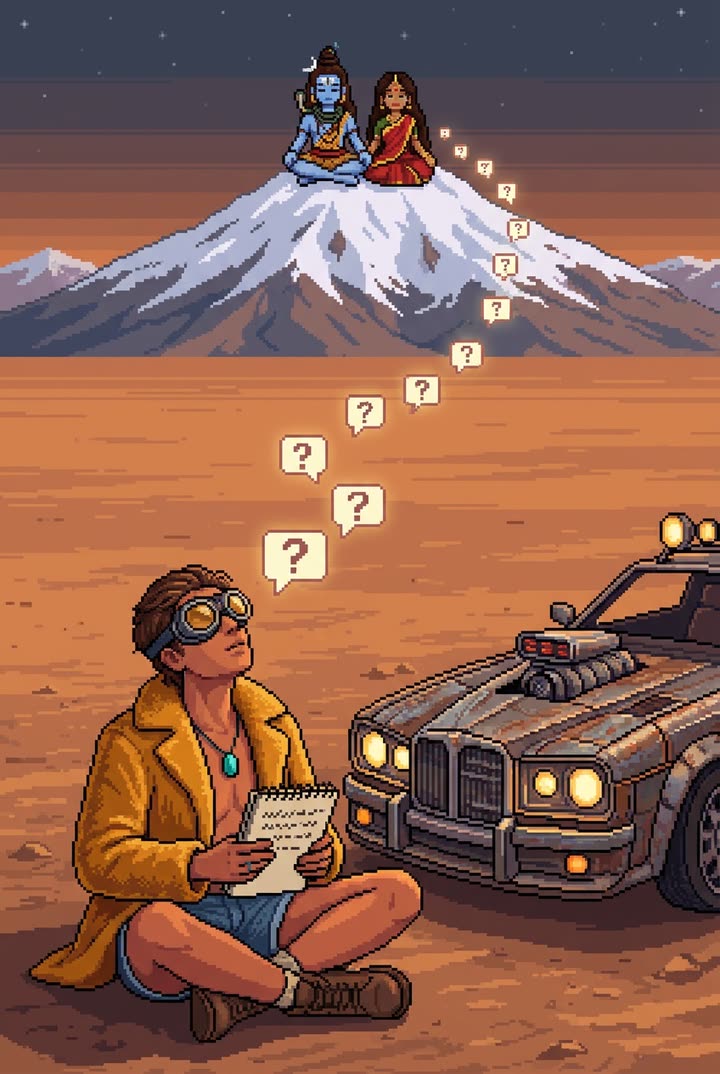
A burner writes ten lines in a diary; glowing question marks rise toward the gods on the mountain

STEP 2 OF 6

The library is searched for the mechanism, not the noun.

Not "a story about jealousy". A story where someone wanted two things that cannot both be true. The library is searched several times, from different angles, including the angle that could prove the first idea wrong. The stories that come back are read in their own context, the chapters around them too, before any of them is allowed near your answer.

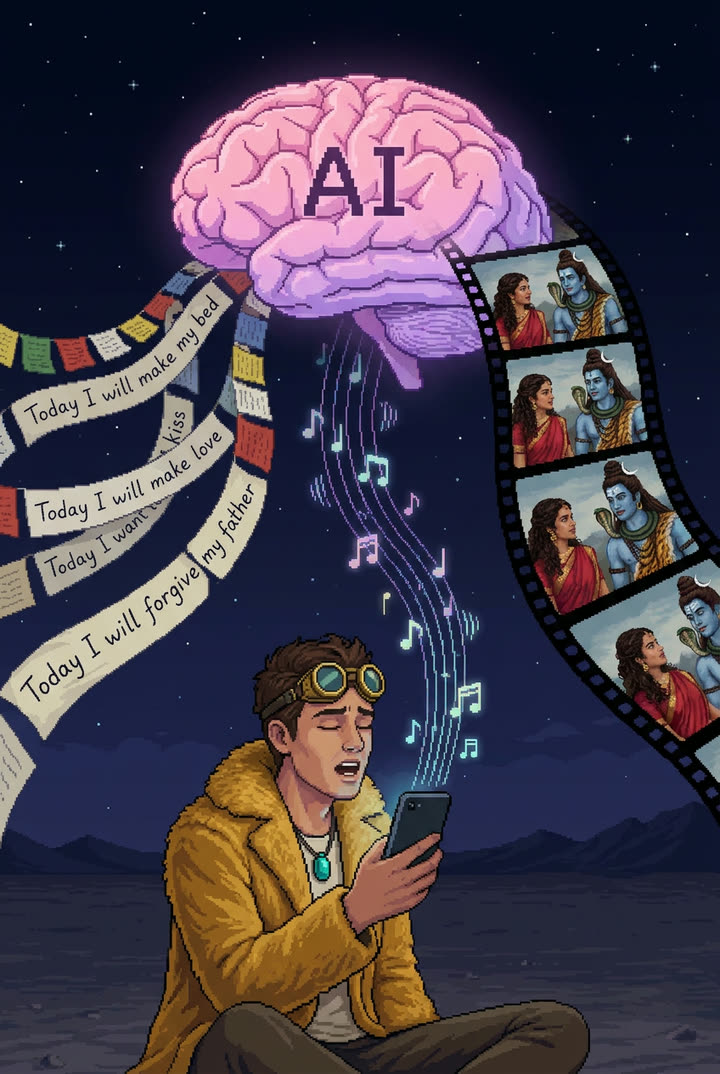
An AI brain in the night sky; diary lines, the gods' film strip and a sung song flow into it

STEP 3 OF 6

Only real stories. Every one names its book.

This is the rule that separates it from asking any chatbot. A model asked for "a Purana story about debt" will happily invent one. Here every story the gods tell exists in a named book and chapter, in a translation we hold. If the library has no honest parallel for your problem, the gods say so. They do not make one up.

A CARD FROM THE LIBRARY
Markandeya Purana, chapters 7 and 8 · Devi Bhagavata, book 7

The king who kept his word and lost his kingdom, his wife, his son and his name

Harishchandra had promised a sage anything he asked. The sage asked for the kingdom, and he gave it; then for a fee on top. Keeping his word took him to the bottom of the world: the burning ground, and a fee demanded of his own wife over their son's body.

integrity cost me everythingdebtlosing all status

Shiva: the burning ground is his place, and the king worked it honestly. Parvati: the wife carried the body.

STEP 4 OF 6

A writer and a critic.

One draft is written. Then an independent critic argues against it: does the story really fit your life or only sound like it, is the insight earned or just pretty, is anything left out that would mislead you, did the gods put words in your mouth. The draft is rewritten until it holds. If it never holds, nothing is shown. Only then do the gods get their lines.

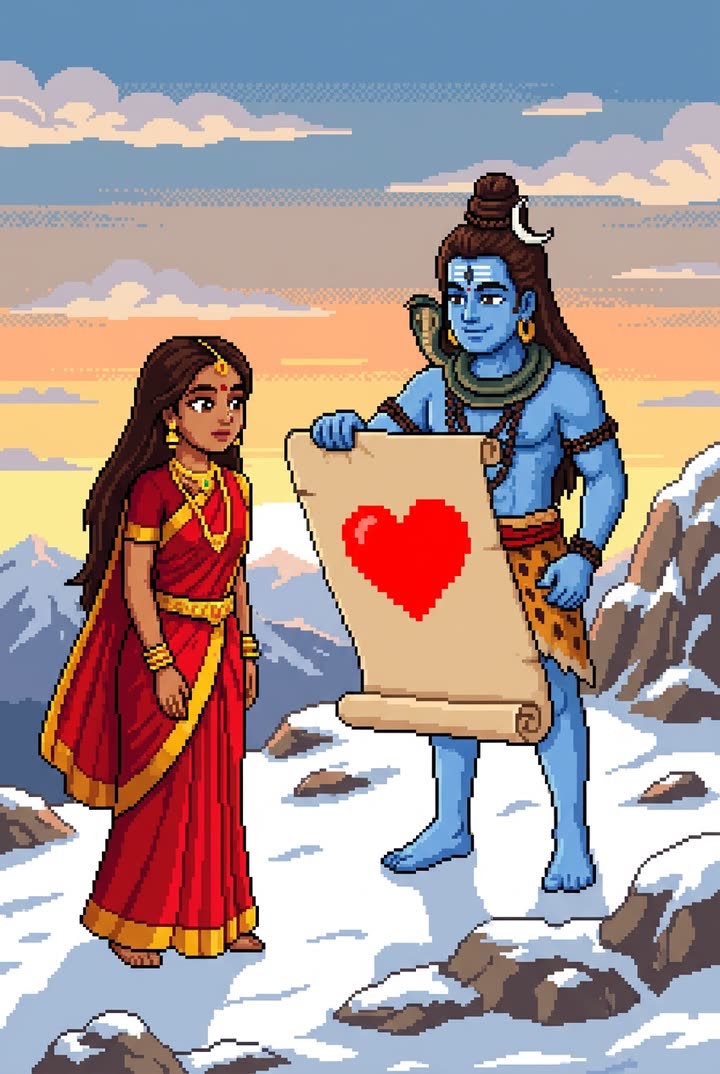
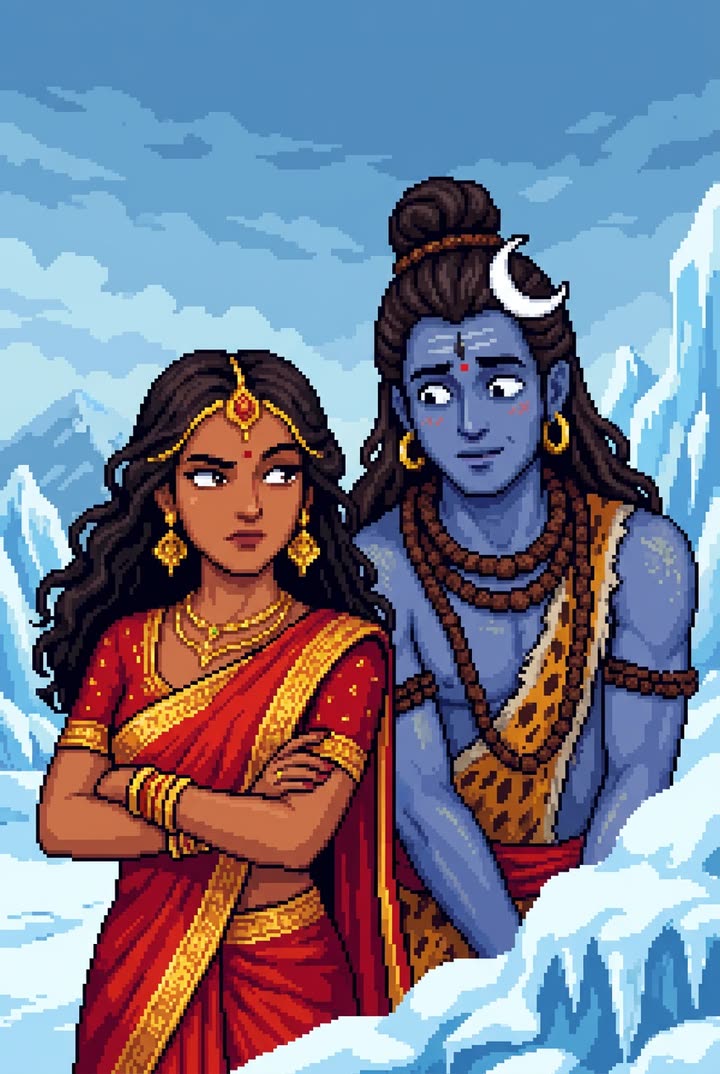
Shiva proudly unrolls a scroll with a heart on it Parvati, arms crossed, gives Shiva a slow side-eye

STEP 5 OF 6

Why a sitcom.

People hear hard truths when the gods bicker. Parvati's side-eye does more than a lecture, and a joke about the Orgy Dome makes room for the sentence that follows it. Thirty to ninety seconds, because an answer you can hold is better than one you can file. The film is yours to keep, replay, or delete.

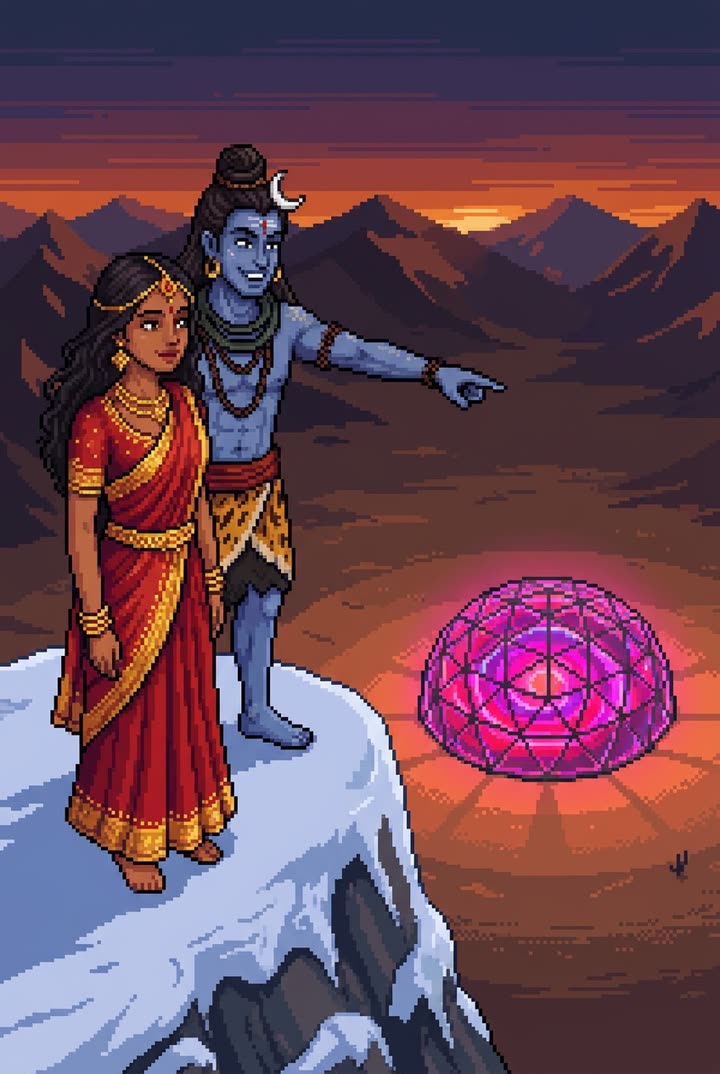
Shiva grins and points at a glowing pink dome far below on the playa

STEP 6 OF 6

What the brain remembers.

Your words stay yours. From your diary and your questions the brain keeps one private picture of you. Words, not a photo. That picture is what looks for a match. A match never reads your diary or your questions. They see the name you go by, the portrait the app painted of you, and they hear your song. That is all.

The privacy promise, in plain words →

A diary locked with a padlock next to a phone that shows only a portrait and a play button

The library

It keeps growing.

The gods read from the Puranas and the other scriptures of India, in translations we hold, plus a growing set of story cards written from those sources with the book and chapter named on every card. New passages are reviewed before they can be used; an unreviewed passage never reaches an answer. Not everything is in yet. The eighteen great Puranas alone are more than a lifetime of reading, and we say so rather than pretend.

Everything that is in it today, counted, and what is not in yet →

Shiva Purana, Rudra Samhita · Devi Bhagavata, book 7 · Bhagavata Purana, book 4

Sati and her father's sacrifice

Sati chose Shiva: the outsider with ash on his skin. Her father would not have him at the table. A love the family refuses is not thereby wrong, and a grief you carry whole will kill the world around you.

family disapproves of my partnergrief

Ramayana, Yuddha and Uttara Kandas

Sita walks into the fire, and the second time she refuses

She proved it once, in fire, and that was already one time too many. The second time she did not argue; she left through the floor.

my partner demands proofI will not prove myself again

Markandeya Purana, chapters 7 and 8

The king who kept his word

Integrity took him to the burning ground. The story does not say he was wrong to keep his word. It says what keeping it costs, and who pays beside you.

I kept my word and it ruined medebt

Then the Burn

The picture finds someone.

From your first line until the Burn, every line and every question goes into the picture. When the gate opens, the picture has had months to learn you, and it goes looking for one person. Not a list. This is what we are building.